
Valencia vs Costa Blanca: Which is Better for Expats? (2026 Data Comparison)

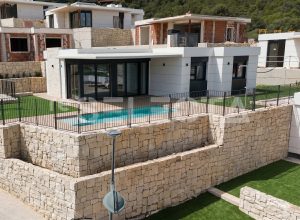
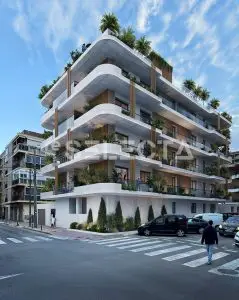
Valencia city and the northern Costa Blanca sit ninety minutes apart in the same region, and almost every number that matters to a buyer is different. Apartments in Valencia run €2,200–€4,500 per m²; villas in the premium Costa Blanca zones reach €9,000. Annual ownership costs run roughly €2,700 against €5,600. Foreign residents make up 19.6% of Valencia and 53.1% of Calpe. This is the comparison in figures rather than adjectives – fifteen tables covering property, running costs, climate, community, healthcare and transport.
| Dimension | Valencia city | Northern Costa Blanca |
|---|---|---|
| Typical property | Apartment, 90–150 m² | Villa, 150–300 m² + plotDepends on you |
| Price per m² | €2,200–€4,500Narrow band — easier to value, easier to resellValencia | €1,800–€9,000 |
| What €500,000 buys | 110–140 m² renovated apartment, central | 3-bed villa, private pool, 600 m² plotNo equivalent exists in Valencia at this priceCosta Blanca |
| Market depth above €1.2M | Thin — few exceptional apartments | Deep, runs to €5M and beyondA functioning prime market with real supplyCosta Blanca |
| Annual running cost | ~€2,700 fixed · ~€3,100 all-inRoughly a third of the coastal villaValencia | ~€5,600 fixed · ~€11,000 all-in |
| IBI rate | 0.654%Valencia | 0.66% – 0.85% |
| Private outdoor space | Balcony or terrace, rarely more | Garden and pool as standardThe single clearest structural advantageCosta Blanca |
| Annual average temperature | 17.6 °C | 19.3 °C (Jávea)Sheltered from northerly wind by the sierraCosta Blanca |
| Annual rainfall | ~427 mmDrier than the coast — contrary to assumptionValencia | ~600–650 mm (Marina Alta) |
| Sea and coastline access | City beach, 20–30 min by tram | Coves and cliff coastline within minutesCosta Blanca |
| Foreign residents | 19.6% | 38.5% – 56.4%Depends on you |
| Foreign population profile | Working-age; Latin American, Italian, Eastern European | Retired and semi-retired Northern EuropeanDifferent worlds |
| Everyday language | Spanish — you will need it | English works for most daily lifeDepends on you |
| Car required | No — metro, tram, bikeSaves €2,500–€4,000 per vehicle per yearValencia | Yes, unavoidably — usually two per household |
| Time to major airport | 20 min by metroValencia | 45–90 min by car |
| Hospital access | 10–25 min to tertiary care (La Fe)The margin widens with ageValencia | 15–35 min district · 60–90 min tertiary |
| International schools in range | 9+ within 40 min, five curriculaChange school without moving houseValencia | 2–3 per catchment, mostly British |
| Winter atmosphere | Unchanged — a full city year-roundValencia | Quiet to very quiet; varies sharply by town |
The short version: Valencia wins on infrastructure, predictability and cost of ownership. The Costa Blanca wins on space, outdoor living, climate and the top of the market. Nearly every buyer’s decision reduces to how they weight those two lists.
Property prices — what a budget actually buys
The single most useful comparison, and the one usually written in vague budget bands. Here it is in price per m², which is how the two markets can actually be compared.
Valencia city — €/m² by district, 2026
| District | €/m² (resale) | Character |
|---|---|---|
| Ruzafa | €3,500–€4,500 | Central, lively, period stock |
| Ciutat Vella | €3,200–€4,800 | Historic, high variance |
| Pla del Real / Mestalla | €3,000–€4,200 | Quiet, refined, family-friendly |
| Patacona / Alboraya | €2,800–€4,200 | Modern beachfront |
| El Cabanyal | €2,400–€3,800 | Beachfront, in transition |
| Benimaclet | €2,200–€3,200 | Value entry point |
Northern Costa Blanca — €/m² by zone, 2026
| Zone | Villa €/m² | Apartment €/m² |
|---|---|---|
| Benissa Costa (Fanadix, Buenavista) | €5,500–€9,000 | — |
| Moraira (El Portet, La Sabatera) | €5,500–€8,500 | €3,000–€4,500 |
| Altea Hills | €4,500–€8,000 | — |
| Jávea hills | €3,500–€7,000 | €3,200–€5,500 |
| Calpe premium hills | €4,500–€7,000 | €2,400–€3,800 |
| Altea town | €3,500–€6,000 | €2,800–€4,500 |
| Dénia (general) | €2,200–€3,500 | €2,000–€2,800 |
| Polop / La Nucía | €1,800–€3,500 | €1,500–€2,400 |
The same budget, side by side
This is the table most buyers actually want. What each budget delivers in each market:
| Budget | Valencia city | Northern Costa Blanca |
|---|---|---|
| €300,000 | 85–110 m² apartment, Benimaclet or Cabanyal; or 70–85 m² in Ruzafa | 2–3 bed townhouse with communal pool in Calpe or Polop; small villa inland |
| €500,000 | 110–140 m² renovated apartment, Pla del Real or Ruzafa, balcony | 3-bed detached villa, private pool, 500–700 m² plot, Polop or inland Calpe |
| €750,000 | 150–180 m² apartment with terrace, prime central; or small penthouse | 4-bed villa with sea view, Jávea hills or Calpe; entry-level Altea |
| €1,200,000 | Exceptional 200 m²+ apartment, historic building or penthouse with roof terrace | Quality villa in Moraira, Benissa Costa or Altea Hills, 200+ m², panoramic view |
| €2,000,000+ | Very rare — the top of the Valencia market is thin above this point | Front-line or cliffside villa, El Portet or Fanadix; a functioning market with real supply |
Two structural points that the numbers make clear:
- Valencia’s market has a ceiling. Above roughly €1.2M the city offers very little — it is an apartment market, and there are only so many exceptional apartments. The Costa Blanca’s market runs comfortably to €5M and beyond.
- The Costa Blanca’s market has a much wider floor. €250,000 buys something genuinely liveable on the coast; in central Valencia it buys a small flat needing work.
Detail by district and town: Valencia neighbourhoods and the Costa Blanca areas guide.
Annual running costs — the number that decides retirements
Purchase price is a one-off. Running cost repeats every year for as long as you own, and it is where the two markets diverge most sharply. Both examples below are properties of similar value — around €400,000–€450,000.
| Annual cost | Valencia apartment (Eixample, lift) | Costa Blanca villa (premium urbanización, pool) |
|---|---|---|
| IBI (municipal property tax) | ~€720 | ~€1,700 |
| Basura (waste collection) | ~€110 | ~€180 |
| Community fees | ~€1,200 | ~€2,400 |
| Non-resident tax (Modelo 210, imputed) | ~€230 | ~€530 |
| Home insurance | ~€300 | ~€700 |
| Gestor / annual filing | ~€100 | ~€120 |
| Subtotal, fixed | ~€2,660 | ~€5,630 |
| Pool maintenance | €0 | €900–€1,800 |
| Garden maintenance | €0 | €600–€2,400 |
| Car (essential on the coast) | €0 optional | €2,500–€4,000 |
| Realistic all-in | €2,700–€3,500 | €9,500–€13,500 |
Annual cost of ownership, visualised
Valencia apartment — €3,100 typical
Costa Blanca villa — €11,000 typical
Comparable property values (~€425,000). The villa costs roughly 3.5× more to run.
This is the single most under-modelled number in a Spanish relocation. Over twenty years, the difference compounds to roughly €160,000 — comparable to a meaningful share of the purchase price itself. It does not make the villa a bad decision; it makes it a decision that has to be budgeted honestly.
IBI rates differ by municipality and are worth knowing before choosing a town:
| Municipality | IBI rate |
|---|---|
| Altea | 0.85% |
| Jávea / Xàbia | 0.81% |
| Dénia | 0.79% |
| Calpe | 0.66% |
| Valencia city | 0.654% |
Full detail in our annual cost of ownership guide, with the one-off purchase costs in our cost of buying breakdown.
Climate — month by month
Both climates are excellent and the differences are smaller than marketing suggests. But they are not identical, and one common assumption is simply wrong.
| Month | Valencia high / low | Jávea high / low |
|---|---|---|
| January | 16° / 7° | 16° / 8° |
| February | 17° / 8° | 17° / 8° |
| March | 19° / 9° | 19° / 10° |
| April | 21° / 11° | 20° / 11° |
| May | 24° / 14° | 23° / 14° |
| June | 27° / 18° | 27° / 18° |
| July | 30° / 21° | 29° / 21° |
| August | 30° / 22° | 30° / 22° |
| September | 28° / 19° | 27° / 20° |
| October | 24° / 15° | 24° / 16° |
| November | 19° / 11° | 20° / 12° |
| December | 17° / 8° | 17° / 9° |
| Annual average | 17.6°C | 19.3°C |
Temperatures in °C, indicative long-term averages. The Costa Blanca’s edge is real but modest — roughly a degree and a half on the annual mean, concentrated in the shoulder months rather than in mid-winter.
The rainfall assumption that is backwards
Most buyers assume the Costa Blanca is drier than Valencia. For the southern coast that is true. For the northern Costa Blanca — the part with the villas and the views — it is the opposite:
| Location | Annual rainfall | Sunshine hours |
|---|---|---|
| Torrevieja / southern coast | ~300 mm | ~2,900 |
| Alicante | ~359 mm | ~2,860 |
| Valencia city | ~427 mm | ~2,700 |
| Jávea / Dénia (Marina Alta) | ~600–650 mm | ~2,800 |
The Montgó massif and the Marina Alta hills force moist air upward, which produces both the green landscape people come for and materially more rain than the Valencia plain. September is the peak — Jávea can take over 100 mm in that month alone. The same mountains also shelter the coast from cold northerly wind, which is where the winter mildness comes from. You cannot have one without the other.
Valencia’s specific climate risk is different: the autumn DANA (gota fría) systems that affect the Valencian plain, which are less frequent but can be severe.
Verdict on climate: Costa Blanca by a small margin on temperature and winter mildness. Valencia is drier. Neither difference should decide a purchase on its own.
The international community — the numbers behind the impression
This is where the data changes the conversation most. Headline percentages tell one story; composition tells a completely different one.
| Municipality | Population | Foreign residents | Share |
|---|---|---|---|
| Teulada / Moraira | 12,857 | 7,250 | 56.4% |
| Calpe | 26,637 | 14,132 | 53.1% |
| Jávea / Xàbia | 30,482 | 14,332 | 47.0% |
| Altea | 24,349 | 9,381 | 38.5% |
| Valencia city | 844,424 | 165,636 | 19.6% |
Foreign residents as a share of population
Teulada / Moraira — 56.4%
Calpe — 53.1%
Jávea — 47.0%
Altea — 38.5%
Valencia city — 19.6%
INE padrón data. Calpe is the first sizeable Spanish municipality where foreign residents outnumber Spanish nationals.
Now the part the percentages hide. Valencia’s largest foreign communities are Colombian (20,461), Italian (15,518), Venezuelan (10,264), Ukrainian (10,196), Chinese (8,988) and Russian (7,911) — overwhelmingly working-age people who came to work or study, distributed across the city and integrated into Spanish-language daily life.
The northern Costa Blanca’s foreign population is predominantly British, German, Dutch, Belgian and Scandinavian, skewed heavily toward retirement and semi-retirement, and concentrated in residential urbanizaciones with their own English-language service economy.
The practical consequence:
| Valencia city | Northern Costa Blanca | |
|---|---|---|
| Foreign share | 19.6% | 38–56% |
| Typical profile | Working age, 25–45 | Retired / semi-retired, 55–80 |
| Main origins | Latin America, Italy, Eastern Europe, China | UK, Germany, Netherlands, Belgium, Scandinavia |
| Everyday language | Spanish — you will need it | English works for most daily life |
| Ease of arrival | Slower; integration takes effort | Fast; ready-made community |
| Risk | Isolation if you don’t learn Spanish | Never learning Spanish at all |
Neither is better. But a buyer who wants to live in Spain rather than in an international enclave should understand that the Costa Blanca makes that harder, not easier — and a buyer who wants a soft landing at 68 should understand that Valencia will ask more of them.
Healthcare access
| Location | Nearest public hospital | Drive time | Tertiary referral centre |
|---|---|---|---|
| Valencia city | La Fe, Clínico, General, Peset | 10–25 min | On site (La Fe) |
| Valencia villa belt (Rocafort, Bétera) | La Fe / Clínico | 20–30 min | 20–30 min |
| Jávea | Hospital de Dénia | 15–20 min | Alicante, 60–75 min |
| Moraira | Hospital de Dénia | 20–25 min | Alicante, 70–85 min |
| Calpe | Hospital de Dénia / Marina Baixa | 30–35 min | Alicante, 60–75 min |
| Altea / La Nucía | Hospital Marina Baixa (Villajoyosa) | 15–25 min | Alicante, 45–60 min |
The honest reading: routine and district-level care on the northern Costa Blanca is perfectly adequate — Dénia and Marina Baixa are real hospitals within a sensible drive. The gap is at tertiary level, where Valencia has La Fe on the doorstep and the coast is an hour or more from Alicante. Add fifteen minutes to every coastal figure if the property sits up a hillside urbanización road, and add more in August.
Private cover costs the same in both places — roughly €45–€85 a month at 35, €130–€220 at 65, €200–€350+ at 70. Our healthcare guide for foreign residents covers the four routes into the Spanish system, what private policies exclude, and 2026 public waiting times.
Verdict on healthcare: Valencia, clearly, and the margin widens with age.
Transport and connectivity
| Journey | From Valencia city | From Jávea / Moraira |
|---|---|---|
| To international airport | 20 min (metro to VLC) | 75–90 min (car to ALC) |
| To Madrid | 1h 40m (AVE) | 5h+ (car, or via Alicante AVE) |
| To Barcelona | 2h 45m (train) | 4h 30m+ (car) |
| To the other region | 90–110 min to the Costa Blanca | 90–110 min to Valencia |
| Daily local transport | Metro, tram, bus, bike lanes | Car only; limited intercity bus |
| Car ownership | Optional | Mandatory, usually two per household |
| Annual cost of that difference | ~€600 (transport pass) | €2,500–€4,000 per car |
Car dependency is not a small lifestyle footnote — it is a cost line, a logistics constraint, and eventually an age constraint. A couple in their sixties rarely thinks about it. The same couple at eighty-two, on a hillside road twenty minutes from a supermarket, thinks about very little else.
Verdict on transport: Valencia, decisively.
Cost of living — a household budget compared
Property aside, day-to-day costs are closer than most people expect. Two comparable couples, both retired, both eating out twice a week:
| Monthly household cost | Valencia city | Northern Costa Blanca |
|---|---|---|
| Groceries | €400–€550 | €420–€600 |
| Utilities (electricity, water, internet) | €120–€180 | €180–€280 |
| Transport | €60–€100 | €250–€400 |
| Dining and leisure | €300–€500 | €300–€550 |
| Property running cost (monthly equivalent) | €225–€290 | €790–€1,125 |
| Private health insurance (couple, 65) | €260–€440 | €260–€440 |
| Total | €1,365–€2,060 | €2,200–€3,395 |
Note what drives the gap. Groceries, dining and healthcare are near-identical. Almost the entire difference comes from three lines — property running costs, transport and utilities — and all three are consequences of the villa-and-car lifestyle rather than of the coast being an expensive place per se. A couple in a Calpe apartment without a pool lands much closer to the Valencia column.
For comparisons against your current country, see Spain vs the UK, Spain vs the USA and Spain vs the Netherlands.
Families and schooling
| Valencia metro | Northern Costa Blanca | |
|---|---|---|
| International schools in range | 9+ | 2–3 per catchment |
| Curricula available | British, IB, American, French, bilingual | British, with limited IB |
| Typical secondary fees | €7,500–€11,500 | €9,500–€11,000 |
| Typical commute | 5–15 min in the villa belt; 25–40 min by bus from the centre | 5–25 min |
| Optionality if a school doesn’t suit | High — switch without moving house | Low — often one credible alternative |
Optionality is the point families underestimate. In Valencia’s northern crescent a family has four schools within twenty minutes, so a curriculum change or a poor fit for one child does not require selling a house. In most Costa Blanca catchments it might.
Detail in our international schools guide and where to live with school-age children.
Twenty-year cost of ownership — two worked scenarios
A retired couple, €450,000 budget, planning twenty years in Spain.
| Valencia — 120 m² apartment, Pla del Real | Costa Blanca — 3-bed villa with pool, Calpe | |
|---|---|---|
| Purchase price | €450,000 | €450,000 |
| Purchase costs (~12%) | €54,000 | €54,000 |
| Annual running cost | €3,100 | €11,000 |
| Running cost over 20 years | €62,000 | €220,000 |
| Major maintenance reserve (20 yr) | €25,000 | €60,000 |
| Total 20-year outlay | €591,000 | €784,000 |
| What you got | Central city life, no car, hospital 15 min, walkable to everything | Private pool, garden, sea view, space, silence |
A €193,000 difference over twenty years, on identical purchase prices. That is the honest price of the villa lifestyle, and it is worth paying for many people — but it should be a decision made with the number in front of you, not discovered gradually through annual bills.
Figures exclude inflation and any capital appreciation, which historically has been broadly comparable across the two markets.
Who suits Valencia city
- Buyers who want genuine urban life — culture, restaurants, public transport, walking everywhere
- Younger buyers, remote workers and professionals who want a functioning city at lower cost than Northern Europe
- Families needing several international schools in range and real optionality between them
- Buyers with complex healthcare needs, or who are planning for their eighties rather than their sixties
- Buyers who do not want to own or depend on a car
- Buyers at €200,000–€600,000 who want maximum quality per euro
- Buyers who intend to learn Spanish and integrate rather than join an expat community
- Buyers who want a low, predictable annual running cost
Who suits the Costa Blanca
- Buyers who want a villa with a pool, garden and outdoor space — not an apartment
- Buyers who prioritise coast, sea, outdoor lifestyle and a genuinely slower pace
- Buyers in their 50s–70s wanting to slot into an established community with minimal friction
- Buyers comfortable driving who do not need daily urban amenities
- Buyers at €350,000+ who want detached property with private outdoor space
- Buyers who want English to work for most of daily life
- Buyers above €1.2M, for whom Valencia’s market is simply too thin
- Buyers planning extended stays rather than full-time residence
The answer a lot of buyers reach
A meaningful share of buyers who ask this question end up with both — a Valencia apartment for urban life and the quieter winter months, a Costa Blanca property for summer and extended stays. The two are ninety minutes apart.
The honest arithmetic: two properties at €300,000 and €450,000 carry roughly €14,000 a year in combined running costs, against €11,000 for a single Costa Blanca villa. The second property costs less to add than most people assume, because the fixed costs on a modest city apartment are low. It is not cheap, but it is not the extravagance it sounds like.
How reSELECTA can help
reSELECTA works in both Valencia city and the northern Costa Blanca. We have no preference between them — our interest is the right property for the right buyer, in whichever market that turns out to be. If you are working through this decision, a conversation about your specific priorities is more useful than any general comparison. View our current selection or get in touch.
Once you have a direction, the area guides do the next level of work. For the city: the six Valencia neighbourhoods worth attention. For the coast: the four Costa Blanca sub-markets, with deeper treatments of Altea, Polop and Jávea and Moraira, Benissa and Calpe. And on process: how buying in Spain works end to end.
FAQ
Is Valencia or the Costa Blanca cheaper to live in?
Valencia, and the gap is larger than most comparisons suggest — but almost all of it comes from property running costs and cars rather than from prices being higher on the coast. A Valencia apartment costs around €2,700–€3,500 a year to run; a Costa Blanca villa with a pool and garden costs €9,500–€13,500 including one car. Groceries, dining and healthcare are near-identical in both. A coastal apartment without a pool closes most of the gap.
Is Valencia city or the Costa Blanca better for retiring expats?
The Costa Blanca has historically been the more popular choice because it delivers the villa-with-pool lifestyle at accessible prices alongside a ready-made English-speaking community. Valencia is increasingly chosen by active retirees who want cultural life, no car, and specialist hospitals nearby. The factor that most often decides it late is age planning: at 65 the coast is idyllic, at 82 a hillside urbanización twenty minutes from a supermarket is a genuine problem.
How much foreign population does each area have?
By INE padrón data: Teulada/Moraira 56.4%, Calpe 53.1% (the first sizeable Spanish municipality where foreigners outnumber nationals), Jávea 47.0%, Altea 38.5%, and Valencia city 19.6%. The composition differs completely — Valencia’s foreign residents are mostly working-age Colombians, Italians, Venezuelans, Ukrainians and Chinese, while the Costa Blanca’s are predominantly retired Northern Europeans.
Which has better weather, Valencia or the Costa Blanca?
The northern Costa Blanca is marginally warmer — 19.3°C annual average in Jávea against 17.6°C in Valencia — and better sheltered from cold winds. But it is wetter, not drier: the Marina Alta receives around 600–650 mm of rain a year against Valencia’s 427 mm, because the same mountains that provide shelter also force rainfall. If dryness is your priority, the southern Costa Blanca around Alicante and Torrevieja is the driest option at roughly 300–360 mm.
What does €500,000 buy in each?
In Valencia, a renovated 110–140 m² apartment in a good central district such as Pla del Real or Ruzafa, with a balcony. On the northern Costa Blanca, a three-bedroom detached villa with a private pool on a 500–700 m² plot in Polop or inland Calpe. The same money buys space on the coast and location in the city.
Can you live in Valencia without a car?
Yes, very comfortably — metro, tram, bus and flat, highly bikeable streets. Most international residents in the city either have no car or use one occasionally. On the Costa Blanca a car is mandatory and most households run two, which adds €2,500–€4,000 per vehicle per year.
How far is Valencia from the Costa Blanca?
Roughly 90 minutes by car on the AP-7 to Calpe and Altea, 100–110 minutes to Jávea and Moraira. By train, Valencia Nord to Dénia is about two hours. Many buyers who own in both make the journey regularly without difficulty.
Which is better for families with children?
Valencia, mainly on optionality. The metropolitan area has nine or more international schools across British, IB, American, French and bilingual curricula, most within twenty minutes of the northern villa belt — so a change of school does not mean a change of house. Most Costa Blanca catchments have one or two credible options. Fees are broadly similar at €7,500–€11,500 for secondary.
Which market holds value better?
Both have performed broadly comparably, for different reasons. Valencia benefits from genuine year-round domestic demand and a working city economy, which makes it less exposed to foreign-buyer sentiment. The premium northern Costa Blanca zones — Moraira, Benissa Costa, Altea Hills — are supply-constrained by planning policy and terrain, which supports values at the top end. The weakest position in either market is generic, abundant stock: mid-range apartments away from the centre in Valencia, and volume urbanización product on the coast.
Sources and further reading
- Instituto Nacional de Estadística — padrón population and foreign resident data by municipality
- Colegio de Registradores — property registry transaction data and foreign buyer share
- AEMET — Spanish state meteorological agency, climate normals by station
- Conselleria de Sanitat — Generalitat Valenciana — regional hospital network and health district mapping